Oversized Foam Letters and Logos for Architectural Branding and Large-Scale Signage
Quick Navigation
- Why Large-Scale Branding Matters
- The Challenge of Building Large Letters
- Modern Foam Fabrication Technology
- Planning and Engineering
- CNC Precision Manufacturing
- Unlimited Design Possibilities
- Polyurea Hardcoat Protection
- Advantages of Lightweight Construction
- Installation Flexibility
- Popular Applications
- Readability and Visual Performance
- Finishing and Appearance
- Scalable Production for Any Project Size
- Cost and Efficiency Benefits
- Conclusion
- Frequently Asked Questions
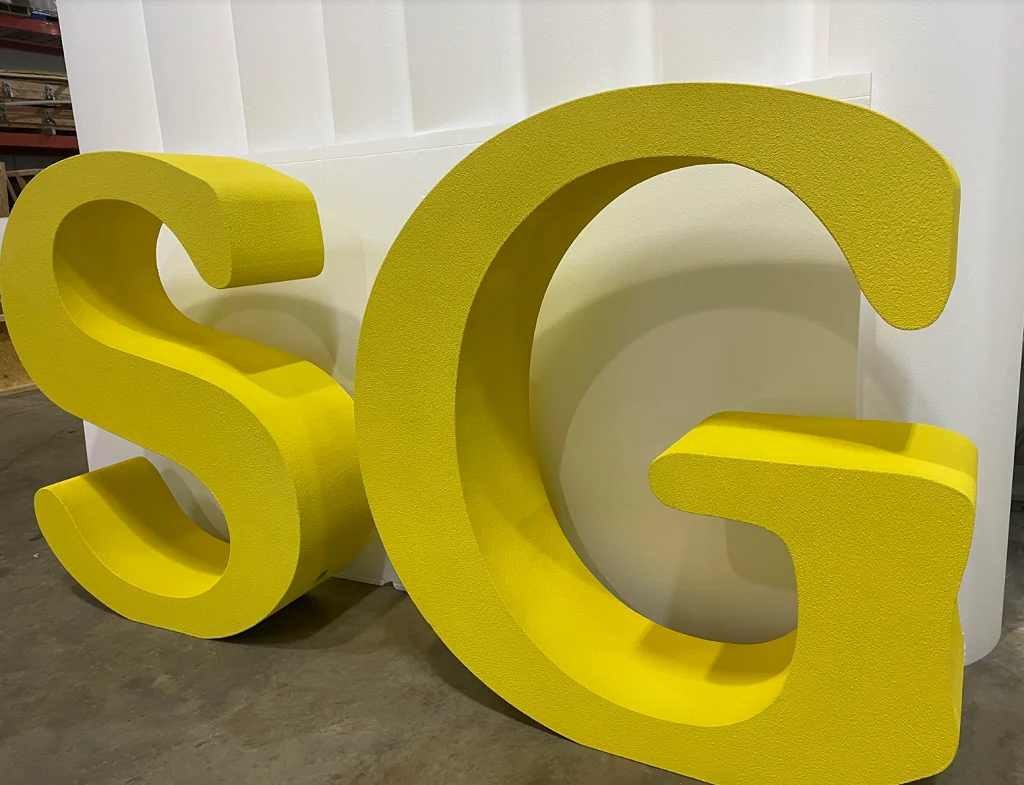
Large foam letters and logos have become a popular solution for creating bold architectural branding across commercial, institutional, and public spaces. From corporate campuses and sports venues to apartment communities, resorts, retail destinations, and event environments, oversized dimensional elements help establish a strong visual presence that traditional flat signage often cannot achieve.
As modern branding continues to focus on visibility and memorable experiences, businesses increasingly invest in large-format signage that serves multiple purposes. Oversized lettering not only identifies a location but can also function as a landmark, a photo opportunity, a social media attraction, and a defining architectural feature.
Why Large-Scale Branding Matters
In competitive commercial environments, visibility is essential. Large dimensional letters naturally command attention, helping organizations strengthen brand recognition while creating a clear focal point within the surrounding landscape.
Unlike standard signs, oversized logos and lettering are often designed to be seen from considerable distances. Their scale helps establish hierarchy, guide visitors, and reinforce brand identity in a way that smaller graphics cannot.
Whether positioned at an entrance, integrated into a building facade, or installed as a freestanding feature, oversized dimensional elements contribute significantly to the overall character of a property.
The Challenge of Building Large Letters
As sign dimensions increase, fabrication becomes more complex. Materials such as solid wood, acrylic, masonry, and metal can become extremely heavy, expensive, and difficult to install at large sizes.
This is where EPS foam offers a significant advantage.
Using 1 lb density EPS foam allows fabricators to create large three-dimensional structures while keeping overall weight remarkably low. The result is a system that is easier to transport, safer to handle, and more practical to install than many traditional construction methods.
Reduced weight also minimizes structural demands on buildings and mounting systems, allowing larger installations to be achieved with greater efficiency.
Modern Foam Fabrication Technology
Today’s oversized foam letters are engineered products designed for long-term performance rather than temporary decorative pieces.
The manufacturing process combines several advanced technologies, including:
- Digital design and engineering
- CNC fabrication
- Structural planning
- Protective coating systems
- Architectural finishing techniques
Each stage contributes to the final appearance, durability, and structural performance of the installation.
Planning and Engineering
Every project begins with detailed design development.
Before fabrication starts, manufacturers evaluate numerous factors such as:
- Logo proportions
- Typography scaling
- Viewing distances
- Installation conditions
- Structural requirements
- Mounting methods
- Site-specific considerations
Proper planning ensures that large lettering remains both visually effective and structurally reliable once installed.
Because oversized signs are often viewed from multiple angles and distances, maintaining correct proportions and visual balance is critical.
CNC Precision Manufacturing
After engineering is complete, the foam components are produced using CNC equipment.
Computer-controlled fabrication allows logos, letters, symbols, and custom shapes to be reproduced with exceptional accuracy. Even complex curves and intricate branding elements can be manufactured while maintaining consistent proportions and clean dimensional detail.
Benefits of CNC fabrication include:
- Precise geometry
- Repeatable results
- Smooth surfaces
- Accurate logo reproduction
- Consistent dimensional depth
This level of precision is especially important for large branding projects where quality and consistency directly affect brand perception.
Unlimited Design Possibilities
One of the greatest strengths of foam fabrication is design freedom.
Oversized dimensional elements can be produced in virtually any form, including:
- Corporate logos
- Script lettering
- Block-style typography
- Sculptural brand features
- Layered graphics
- Architectural text elements
- Custom icons and symbols
- Monument lettering
- Freestanding installations
Because foam can be shaped into highly complex forms, large branding structures often function as both signage and architectural artwork.
Polyurea Hardcoat Protection
Following fabrication, the foam cores receive a polyurea hardcoat that serves as a durable protective shell.
This coating significantly enhances resistance to:
- UV exposure
- Moisture
- Physical wear
- Outdoor weather conditions
- Transportation impacts
- Handling during installation
In addition to protection, the hardcoat helps preserve sharp edges, detailed contours, and smooth surface finishes, ensuring the letters maintain a professional appearance over time.
Advantages of Lightweight Construction
Weight reduction remains one of the most important benefits of oversized foam signage.
Traditional large-scale structures often require:
- Heavy steel framing
- Reinforced foundations
- Specialized lifting equipment
- Additional structural support
- More complex installation procedures
By comparison, EPS foam dramatically reduces these challenges.
The lightweight nature of the material allows large visual structures to be fabricated and installed with fewer logistical complications while still delivering substantial visual impact.

Installation Flexibility
Large foam letters can be adapted to a wide range of installation scenarios.
Common applications include:
- Wall-mounted signage
- Freestanding displays
- Monument sign integration
- Building facade branding
- Rooftop installations
- Event signage
- Landscape features
- Illuminated displays
Their lightweight construction makes transportation and installation far more manageable than many alternative materials.
This flexibility allows designers and property owners to incorporate branding elements into locations where heavier systems may not be practical.
Popular Applications
Oversized dimensional lettering is commonly used in environments where strong visibility and brand recognition are essential.
Typical projects include:
- Universities and educational campuses
- Sports complexes
- Corporate headquarters
- Multifamily residential developments
- Parks and recreation facilities
- Entertainment destinations
- Hospitality properties
- Retail centers
- Event venues
In many cases, these installations become recognizable landmarks that attract visitors and encourage social media engagement.
Readability and Visual Performance
As sign size increases, readability becomes increasingly important.
Successful oversized signage requires careful consideration of:
- Letter spacing
- Stroke thickness
- Dimensional depth
- Viewing angles
- Color contrast
- Overall composition
Well-engineered typography ensures that the message remains clear and visually balanced whether viewed up close or from a significant distance.
Finishing and Appearance
The final finish plays a major role in the overall presentation of large-scale lettering.
Consistent paint application and controlled finishing techniques help create a uniform appearance across all components. Attention to detail during finishing improves:
- Surface quality
- Color consistency
- Edge definition
- Overall visual appeal
A professionally finished installation reinforces brand quality and enhances the architectural presence of the signage.
Scalable Production for Any Project Size
Another major advantage of foam fabrication is scalability.
Manufacturers can produce:
- Single landmark signs
- Multi-property branding systems
- Franchise signage programs
- Event graphics packages
- Architectural identity systems
- Temporary promotional displays
Because production is digitally controlled, projects can maintain consistency while still allowing extensive customization.
Cost and Efficiency Benefits
Beyond design flexibility and visual impact, oversized foam letters also offer practical economic advantages.
The reduced weight of EPS foam can lower:
- Shipping expenses
- Installation costs
- Structural requirements
- Labor demands
- Equipment needs
As a result, organizations can achieve larger and more impressive branding features without the expenses often associated with traditional materials.
Built for Long-Term Performance
Durability remains a key consideration in every oversized lettering project.
When properly fabricated and protected with a polyurea hardcoat, foam letters are capable of maintaining their structural integrity and appearance through years of outdoor exposure.
This combination of lightweight construction and long-term durability makes EPS foam a highly effective material for large-scale architectural branding.
Conclusion
Oversized foam letters and logos have become one of the most practical and visually impactful solutions in modern architectural signage. By combining lightweight EPS foam construction, CNC precision fabrication, durable protective coatings, and extensive design flexibility, manufacturers can create large branding elements that deliver exceptional visibility without the limitations of heavier materials.
For sign companies, architects, developers, event organizers, and branding professionals, large-scale foam lettering offers a cost-effective way to achieve landmark-level presence while maintaining efficient fabrication, installation flexibility, and reliable long-term performance.
Frequently Asked Questions
Why is EPS foam preferred over traditional materials for making oversized letters?
As signs grow larger, traditional materials like metal, wood, or masonry become dangerously heavy, expensive, and difficult to install. Lightweight 1-lb density EPS foam solves these issues, allowing for massive structures that are safe to handle, cheap to ship, and place minimal stress on buildings.
How do large foam letters function as more than just a standard business sign?
Due to their massive scale and three-dimensional presence, oversized foam letters often serve as public landmarks, architectural art, and interactive photo opportunities. This naturally draws crowds and drives organic brand exposure across social media platforms.
What role does a polyurea hardcoat play in the longevity of outdoor foam signs?
The polyurea hardcoat acts as a rugged protective armor that shields the inner EPS foam core from moisture, UV rays, physical impacts, and harsh weather. It also locks in sharp text edges and smooth finishes, ensuring the sign looks premium for years to come.
Does the lightweight nature of foam signage limit where it can be installed?
On the contrary, it vastly increases installation flexibility because it eliminates the need for heavy steel framing or massive reinforced foundations. Foam letters can be easily integrated into rooftops, building facades, landscape features, wall mounts, or freestanding displays.
What are the main benefits of using CNC precision manufacturing for large logos?
CNC technology allows complex corporate logos, script typography, and intricate symbols to be scaled up with mathematical accuracy. This computer-controlled process guarantees flawless geometry, repeatable production, and highly consistent depth across all sign components.
How do oversized foam signs provide economic advantages over traditional construction?
By replacing heavy raw materials with EPS foam, companies drastically lower their total project expenses through reduced shipping weight, fewer specialized rigging tools, and faster installation labor. This enables businesses to build landmark-sized branding elements without the astronomical costs of metal or concrete.
Read more
Acrylic Letters and Logo Signs: A Practical Guide for Business Owners

Foam Routed Signs and CNC-Cut Signage: When and Why Businesses Choose This Format
Hanging Signs for Trade Show Booths: Weight, Rigging, and Sightlines That Work
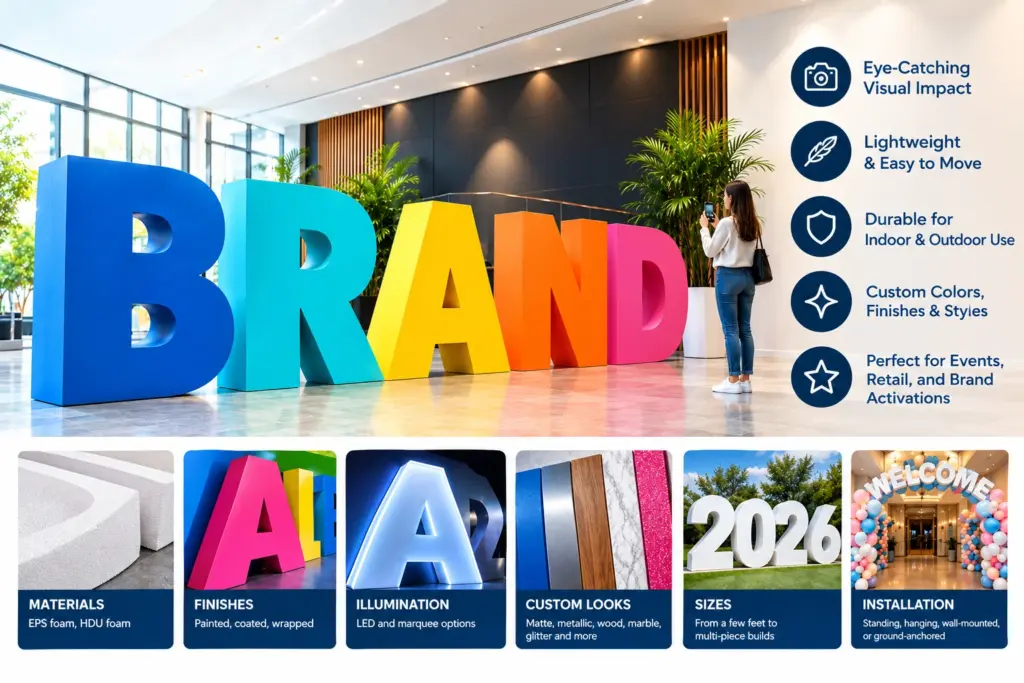
Oversized Foam Letters for Events, Retail Displays, and Brand Activations
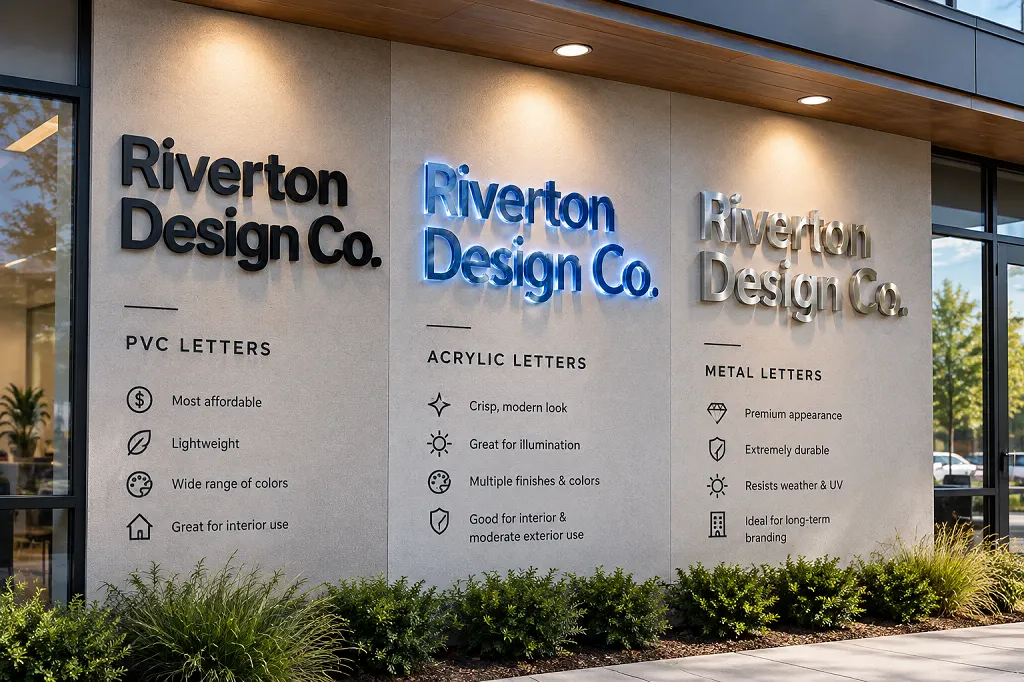
PVC, Acrylic, or Small Metal Letters: Choosing the Right Dimensional Letters for Your Storefront
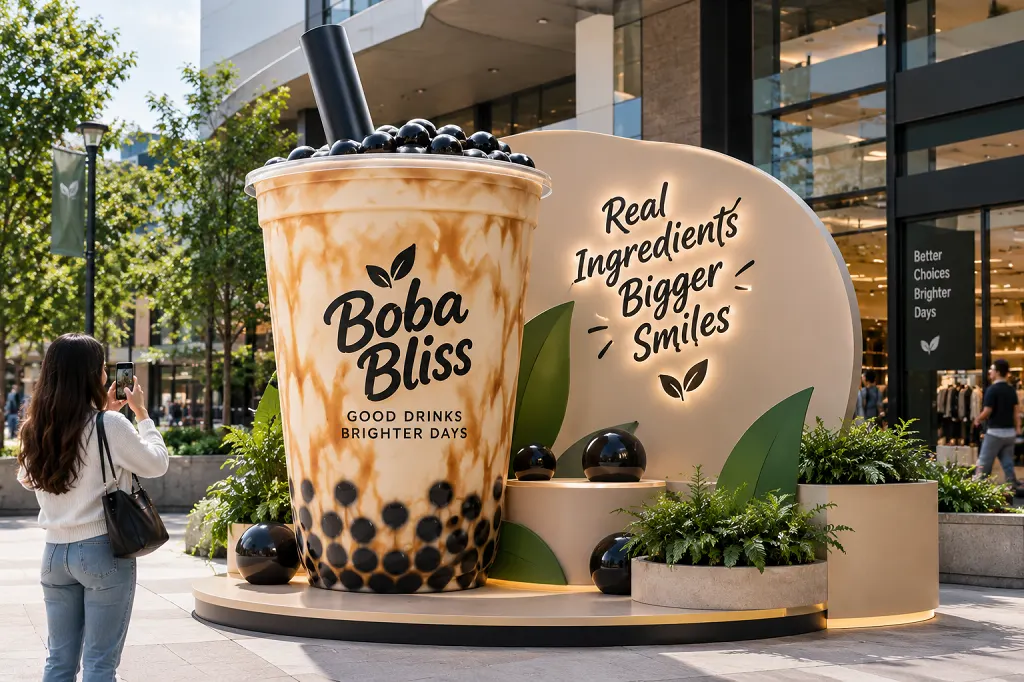
Foam Sculptures and Oversized Product Replicas: How Brands Build Unmissable Experiential Marketing
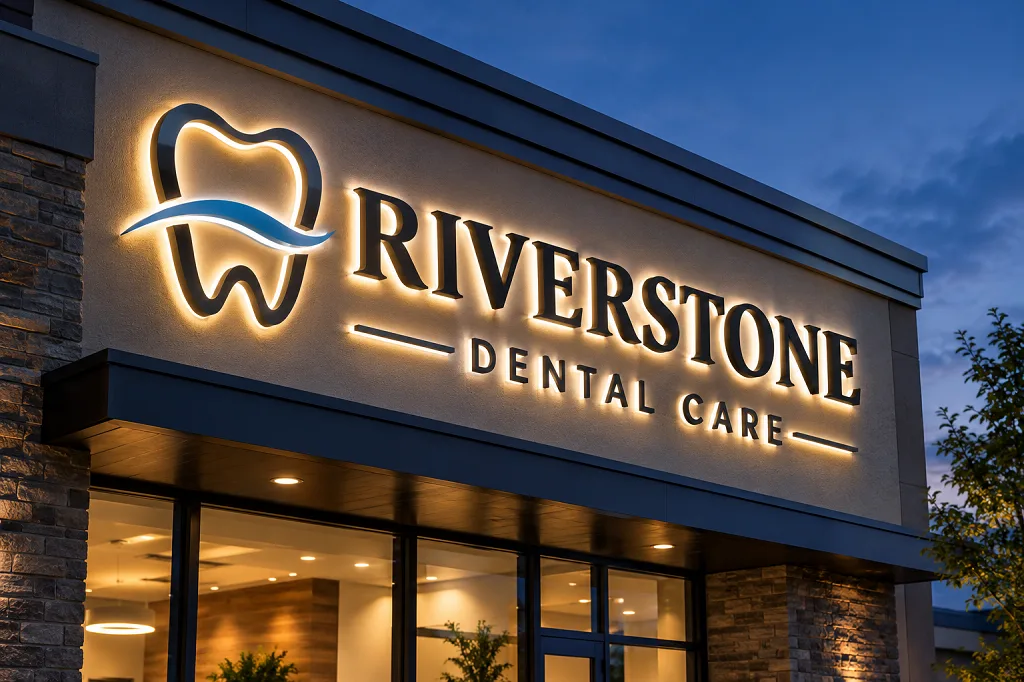
How Backlit and Halo-Lit Signs Turn a Storefront Into a Landmark After Dark
Digital Signage for Business: What It Is and How to Use It Effectively
Sandblasted and V-Carved Signs: The Craft Behind Timeless, Hand-Finished Business Signage

Floating Pool Letters: A Fresh Way to Brand Pool Parties, Resorts, and Brand Activations
Premium 3D Dimensional Signage with Professional Lighting Solutions
Safety and Warning Signs for the Workplace: A Complete Guide for Business Owners
Recommended Articles
Acrylic Letters and Logo Signs: A Practical Guide for Business Owners
Foam Routed Signs and CNC-Cut Signage: When and Why Businesses Choose This Format
Hanging Signs for Trade Show Booths: Weight, Rigging, and Sightlines That Work
Oversized Foam Letters for Events, Retail Displays, and Brand Activations
PVC, Acrylic, or Small Metal Letters: Choosing the Right Dimensional Letters for Your Storefront
Foam Sculptures and Oversized Product Replicas: How Brands Build Unmissable Experiential Marketing