Acrylic Letters and Logo Signs: A Practical Guide for Business Owners
An office manager inherits a task nobody wanted: replace the sign in the lobby before the new tenants arrive. She asks three shops for pricing on signage acrylic, gets three quotes that don’t resemble each other, and has no idea which one is cheap and which one is just missing hardware. This is a common story, and it usually comes down to a handful of specs.
What You’re Actually Comparing
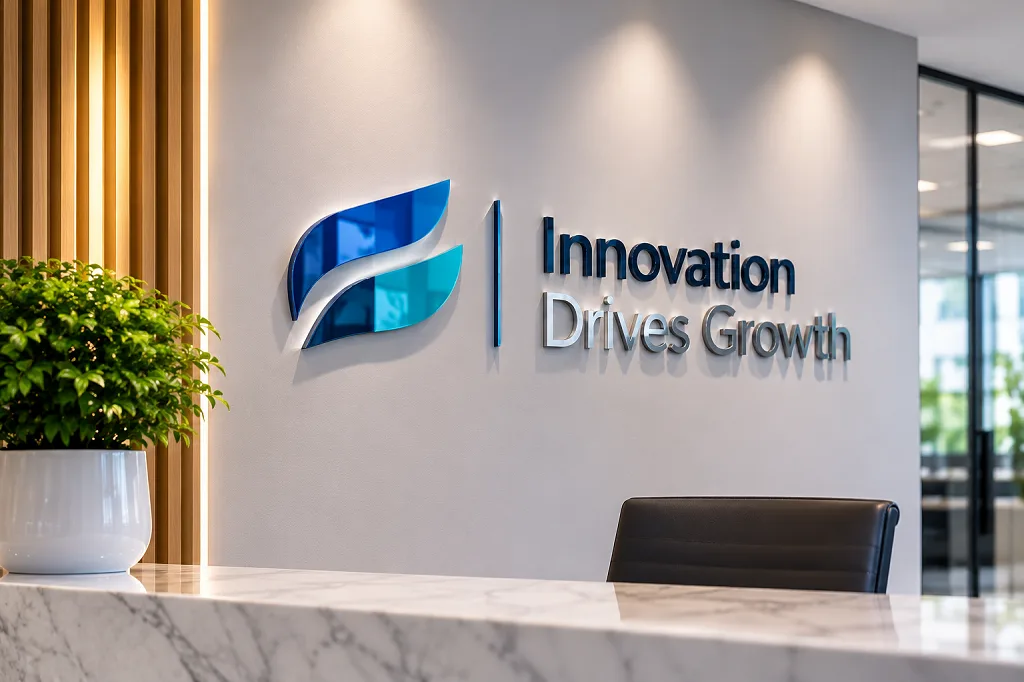
Acrylic letters are individual characters cut from acrylic sheet, then painted, polished, or finished. A logo sign uses the same process for a brand mark, cut as a shape or assembled from layers. Searches for plexiglass signs, custom acrylic signs, and custom acrylic signage all point at roughly the same product, and the quote differences come from material, thickness, finish, and what’s included.
Use a short checklist when quotes arrive. Is the sheet cast or extruded? Is the thickness the same in every quote? Is the finish painted, polished, or mirrored? Which mounting hardware is included, and is a template extra? Is shipping included? Does the lead time run from approval or from order? An acrylic custom sign quote that looks cheap often leaves out hardware or the template, and a higher quote that includes everything may be the lowest in practice.
Ask for photos of previous work at a similar size, and look at the edges. Clean, even edges tell you more than a brochure. Also ask what happens if a letter arrives damaged or the color is off. A good supplier has a clear answer.
Ask who the sign is for before you pick a size. A visitor walking into a lobby will read a name from fifteen or twenty feet away, while a customer driving past a shopping center will take in a name from a hundred feet or more. Letter height scales with distance, and a good rule is one inch of height for every ten feet of viewing distance, with a little extra when the sign sits behind glass or at an angle to the street.
Shape and style count as much as size. Simple letters in a clean typeface read faster and cost less to cut than ornate script with thin connections. Consider the negative space between letters, since tight spacing makes a word look cramped and loose spacing makes it break apart. Your fabricator can adjust kerning, so ask to see a proof before cutting begins.
Logos work best when simplified. Fine gradients, tiny type, and thin outlines don’t transfer well into cut plastic. Ask your designer for a one-color version.
Quality checks help at delivery. Open the package right away, compare the pieces with the approved proof, and inspect the edges for chips or cloudy spots. Look at the paint for drips or uneven color, and make sure all the mounting hardware is included. If something is wrong, take photos and contact the supplier before installation, because a claim is harder after the pieces are mounted.
Thickness, Finish, and Lighting
Thickness changes how substantial the letters feel. A rough guide: 1/8 inch for light signs and delicate scripts, 1/4 inch as the balanced default for most lobby signs, 3/8 to 1/2 inch for bolder letters, and 3/4 inch and up for sculptural statement pieces. Letter height depends on viewing distance. Roughly one inch of height per ten feet is the minimum for legibility, and doubling it is more comfortable. A reception sign viewed from fifteen feet works well with 4- to 8-inch letters, while a feature wall behind a desk can take twelve inches or more.
Finish options include painted faces with clear or matching edges, polished edges that catch light, mirrored gold or silver, layered builds with shadow, and frosted or translucent pieces. For most businesses, a painted face with a polished edge in the brand color is a safe, good-looking pick.
Edge-lit or backlit acrylic (with LED strips concealed behind or within the letter) creates a halo or glow effect that is popular for lobby and reception area signage. Think through the practical side before committing: where power comes from, who replaces failed LEDs, what color temperature suits the room, and whether you need a dimmer. Lighting adds cost, but it turns a good sign into a feature.
Thickness changes how a piece looks and behaves. Thin sheets, around an eighth of an inch, are light and affordable but flex, and they suit small interior signs. Quarter-inch sheets balance cost and stability and work for most lobby and office signs. Half-inch and thicker pieces look substantial, hold polished edges beautifully, and suit large letters and outdoor uses.
Finish options include gloss, matte, frosted, and brushed effects. Gloss shows fingerprints and reflects light, while matte is calmer and hides smudges. Frosted surfaces soften light and work nicely with backlighting. Painted faces come in nearly any color, and the paint is applied on the back so the front stays glossy and protected.
Lighting is a major choice. Halo lighting places a lamp behind the letters so the wall glows around them. Face-lit letters glow from the front and read well at night. If you don’t need lights, a simple wall wash from above is the least expensive way to make the sign noticeable after dark.
Mounting and Timing
The most common methods are standoff mounting (metal posts that hold the letter away from the wall for a floating 3D effect) and flush mounting with VHB tape and adhesive for a clean, flat look. Standoffs come in brushed steel, black, brass, and clear, and they need a paper template for placement. Flush mounting is cheaper and cleaner but doesn’t suit textured walls. Rail systems hang letters from a backing plate, which works in rental spaces where you can’t drill.
Standard cut-and-paint acrylic letters typically have a 5–10 business day production time; complex shapes or specialty finishes may extend this to 2–3 weeks. Add shipping and installation. If you have a grand opening or a move-in date, order at least four weeks ahead, because rush services exist but cost extra.
Preparing the order cleanly saves time. Measure the wall and decide on the height and position. Send the logo as a vector file, such as AI, EPS, SVG, or PDF. Approve a proof that shows size, spacing, and colors. Test the template on the wall before you drill, and confirm the delivery date and installation method. If a letter is damaged later, ask whether the supplier keeps your files and cut paths on record, since reordering a single letter from stored files keeps color and thickness matched.
Mounting and timing deserve attention before you place the order. Pin mounting, with small rods that hold letters off the wall, is common for lobbies. Adhesive tape and silicone suit lightweight pieces on smooth walls, but heavy ones need mechanical fasteners. Ask the supplier to include a paper template so your installer can mark holes accurately.
Allow time for each stage. Artwork approval, proofing, cutting, polishing, painting, and packing can take two to four weeks, and installation depends on your building’s schedule. If a landlord must approve the design, send a rendering early. A grand opening date should be treated as the end of the schedule, not the start.
Plan power and permits for illuminated signs. Exterior signs often require permits and inspections, and the electrician must be licensed in your area. Check local rules before you finalize the design, and leave room in your budget for those costs.
Cleaning and care keep the sign looking sharp. Use a soft microfiber cloth with mild soapy water, and dry with another clean cloth. Avoid ammonia products, since they can cloud the surface, and skip abrasive pads that leave scratches. For stubborn spots, a plastic-safe polish can restore clarity. A quick wipe every couple of weeks keeps dust from building up.
Where Acrylic Isn’t the Best Fit
Outdoors in strong sun, UV-stable cast acrylic works, but PVC or metal may be more cost-effective for large exterior letters. Very large letters get heavy, and foam or PVC might serve better. For textured or carved looks, HDU foam or wood fits better. In high-traffic areas where surfaces get bumped, acrylic scratches, and metal is the tougher option.
For indoor, refined, modern signage, acrylic is hard to beat, but it has habits. Dust it with microfiber, wash with mild soapy water, and skip window cleaners and paper towels, which can scratch or cloud the surface. It builds static, which attracts dust, so an anti-static acrylic cleaner helps.
Mistakes follow a pattern. Low-resolution logos give fuzzy cuts. Letters look smaller on a big wall than on a screen. Textured walls need different hardware than drywall. Pale letters on a pale wall vanish, and skipping the proof invites regret. Hairline details cut poorly and break, so ask for a simplified version of the logo for the wall.
Order a single sample letter in your color and thickness if you can. It costs little and settles most finish questions before you commit to the whole set.
Terminology causes trouble again at the end. Suppliers use plexiglass signs, signage acrylic, and custom acrylic signs interchangeably, but a shop that says custom acrylic signage may also mean printed panels and lit letters. When someone offers an acrylic custom sign at a very low price, check whether it’s extruded sheet and whether mounting hardware is extra. Cast sheet with a polished edge is the benchmark for lobby work.
A few cases favor other approaches. Outdoor signs that face harsh sun, salt air, or freezing temperatures need materials rated for those conditions, and some acrylic grades yellow or craze after years of exposure. Very large signs may be heavy, and metal letters or lightweight composite panels may handle the load better.
High-contact areas, such as a reception desk that visitors lean on, can scratch a polished surface quickly. A matte finish or a hard coat helps, and a framed panel behind glass protects the sign completely.
Be honest about your budget. A simple, well-cut piece in a good typeface often looks better than a complicated design done cheaply. If the money is limited, simplify the shape, choose a standard color, and put effort into the installation. A sign that is straight, level, and well lit makes a better impression than an ambitious one that’s crooked or hard to read.
3dsignfactory.us designs and manufactures custom acrylic, PVC, foam, and metal letters and logos in-house, with 3D mockups and dedicated account support. Get in touch with your logo file and a photo of the wall, and ask for a quote that spells out hardware, templates, and shipping.
Frequently Asked Questions
How are acrylic letters attached to a wall for an office or storefront sign?
The most common methods are standoff mounting (metal posts that hold the letter away from the wall for a floating 3D effect) and flush mounting with VHB tape and adhesive for a clean, flat look.
What is the lead time for a custom acrylic letter order?
Standard cut-and-paint acrylic letters typically have a 5–10 business day production time; complex shapes or specialty finishes may extend this to 2–3 weeks.
Can acrylic letters be illuminated from behind?
Yes – edge-lit or backlit acrylic (with LED strips concealed behind or within the letter) creates a halo or glow effect that is popular for lobby and reception area signage.
Read more
Foam Routed Signs and CNC-Cut Signage: When and Why Businesses Choose This Format
Hanging Signs for Trade Show Booths: Weight, Rigging, and Sightlines That Work
Oversized Foam Letters for Events, Retail Displays, and Brand Activations
PVC, Acrylic, or Small Metal Letters: Choosing the Right Dimensional Letters for Your Storefront

Foam Sculptures and Oversized Product Replicas: How Brands Build Unmissable Experiential Marketing
How Backlit and Halo-Lit Signs Turn a Storefront Into a Landmark After Dark
Digital Signage for Business: What It Is and How to Use It Effectively
Sandblasted and V-Carved Signs: The Craft Behind Timeless, Hand-Finished Business Signage
Floating Pool Letters: A Fresh Way to Brand Pool Parties, Resorts, and Brand Activations

Premium 3D Dimensional Signage with Professional Lighting Solutions
Safety and Warning Signs for the Workplace: A Complete Guide for Business Owners
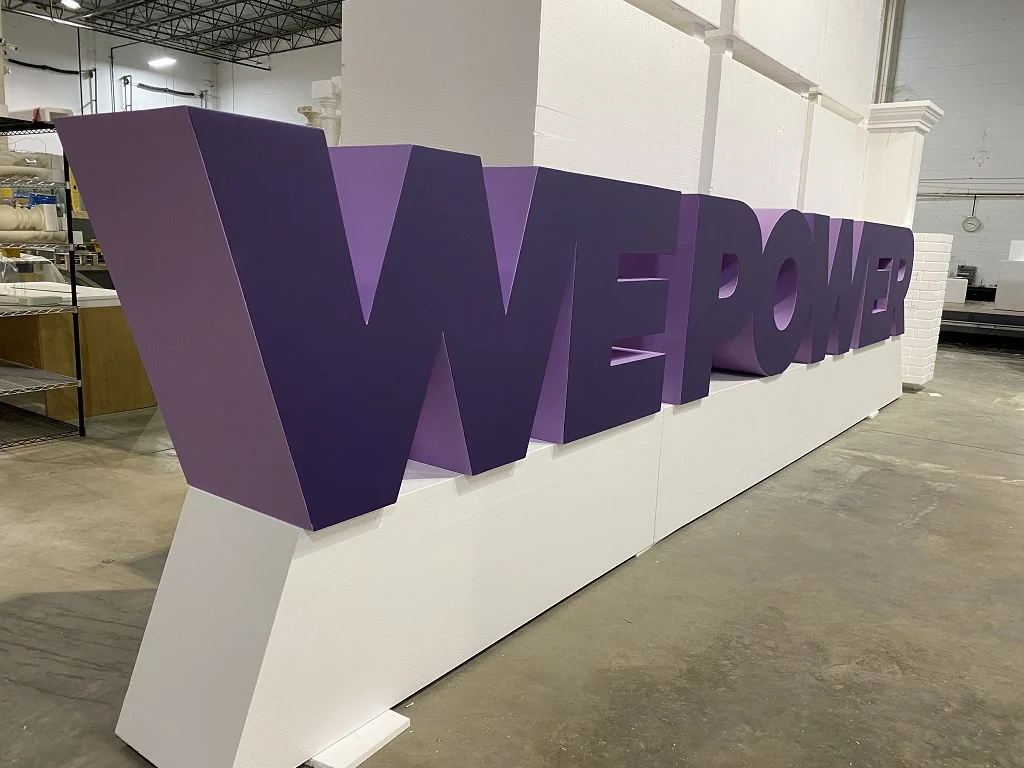
Massive 3D Dimensional Signage That Commands Attention
Recommended Articles
Acrylic Letters and Logo Signs: A Practical Guide for Business Owners
Foam Routed Signs and CNC-Cut Signage: When and Why Businesses Choose This Format
Hanging Signs for Trade Show Booths: Weight, Rigging, and Sightlines That Work
Oversized Foam Letters for Events, Retail Displays, and Brand Activations
PVC, Acrylic, or Small Metal Letters: Choosing the Right Dimensional Letters for Your Storefront
Foam Sculptures and Oversized Product Replicas: How Brands Build Unmissable Experiential Marketing