How to Find and Choose a Sign Company Near You
How to Find and Choose a Sign Company Near You: What to Look for and What to Ask
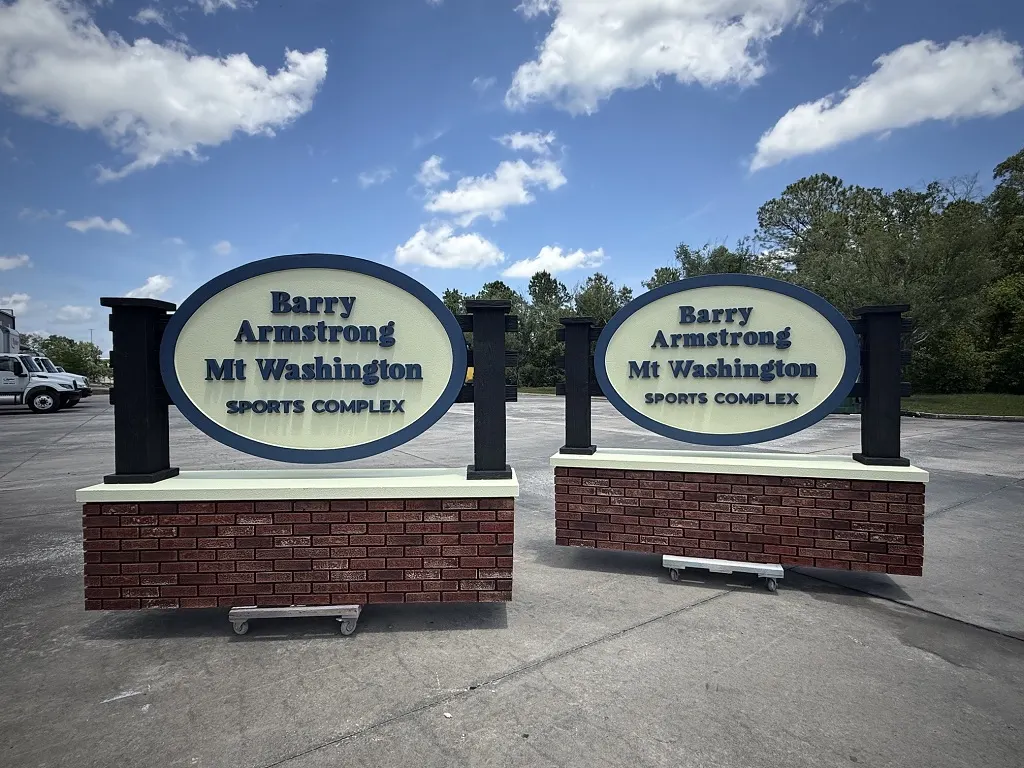
A restaurant owner opening his third location spent three months comparing sign vendors before placing his order. His first location had been signed by a local shop that produced excellent channel letters but had never done a monument sign; the monument sign came out poorly and needed expensive remediation. His second location used a large regional sign company with a full-service team – the result was excellent, but the price was significantly higher than he’d budgeted. For the third location, he wanted the quality of the regional company at something closer to local shop pricing, and he spent considerable time figuring out how to evaluate vendors accurately enough to find it. What he discovered was that the quality of a sign company’s work is entirely predictable from the right set of questions – questions that most customers don’t know to ask because they’ve never ordered commercial signage before. This guide covers exactly what those questions are and how to use the answers to make the right choice.
Why “Sign Companies Near Me” Searches Require More Than a Map
Searching for sign companies near me is almost always the right starting point for any commercial sign project that involves exterior installation, permitting, or site-specific measurement – local vendors have meaningful advantages in all three areas. But proximity is only one dimension of sign company quality, and choosing the nearest or the most prominently ranked result without further evaluation is how restaurant owners end up with poorly executed monument signs.
Business signage near me results typically surface a mix of full-service sign companies, specialized shops focused on specific sign types, large national or franchise sign operations, and smaller general sign shops. Each of these has different strengths, price profiles, and appropriate project types, and the search results themselves don’t distinguish among them.
Sign companies near me that are worth evaluating further have several easily verifiable characteristics: a physical location you can visit, a portfolio of installed projects you can reference, and the willingness to answer specific technical questions about their fabrication process and material specifications. Companies that can’t provide references from comparable installed projects or that deflect technical questions about their materials and process are flagging their own limitations more clearly than any negative review would.
Business signs near me ordering from local vendors has specific advantages for exterior installation projects that are worth understanding: local vendors know local permitting requirements and have established relationships with local inspection authorities. They can visit the installation site for accurate field measurements and surface assessment. They can respond quickly if an installation problem needs correction. And in a dispute about quality or compliance, a local relationship is considerably easier to resolve than a dispute with a remote vendor. For sign projects that don’t require on-site installation – interior signs, trade show displays, or signs the business will install themselves – these local advantages matter less, and the vendor’s fabrication quality and relevant project experience become the dominant selection criteria.
What to Look for in a Sign Company Before Requesting a Quote
Evaluating a sign company effectively before requesting a quote saves time by filtering out vendors who are unlikely to produce the right result for your specific project. Several evaluation dimensions are accessible before any direct engagement.
Portfolio of completed projects comparable to yours is the most direct quality indicator available. A sign company’s portfolio tells you what they’ve actually built and installed, not what they’re theoretically capable of. For your specific project type – whether that’s illuminated channel letters, a monument sign, interior dimensional signage, a trade show display, or a custom 3D element – look for multiple completed examples in their portfolio. A company with extensive channel letter experience and almost no monument sign examples is not the right choice for a monument sign project, regardless of how good their channel letters look.
Physical facility and equipment visible during a site visit or described accurately in response to direct questions tells you whether the company’s fabrication capability matches their marketing claims. A sign company that fabricates dimensional signs in-house will have CNC routing equipment, a finishing area, and the workflow indicators of a production environment. A company that outsources most fabrication to third parties will look like a design and sales office. Neither model is inherently wrong – some outsourcing is normal in the sign industry – but understanding what’s produced in-house versus outsourced helps set appropriate expectations for quality control and lead times.
Signs for businesses near me installations you can actually visit are more valuable than portfolio photographs for evaluating quality, because photographs are selectable (companies show their best work) and can be image-enhanced in ways that physical installations cannot. Asking a sign company to provide the address of a completed installation of the type you’re ordering, so you can visit it and assess the work directly, is a legitimate and common due diligence step that reputable vendors welcome and weak vendors typically resist.
Online reviews focused on the post-installation experience – not just the sales and design process – are the most relevant for quality assessment. Reviews that describe problems discovered weeks or months after installation (coating failure, mounting issues, illumination failures) tell you more about fabrication quality than reviews of the ordering and installation experience. Look for patterns in reviews rather than reacting to individual outliers, and be appropriately skeptical of both uniformly positive reviews (which may be curated) and isolated very negative reviews (which may reflect unusual circumstances).
Questions to Ask a Sign Company Before Committing
The questions that distinguish experienced sign buyers from first-time buyers are the ones about fabrication specifics, material specifications, and post-installation support – not questions about price and timeline that most buyers default to. A sign company’s willingness and ability to answer these questions accurately is itself a quality signal.
What materials and coating systems do you use for this application? For exterior signs, this question should produce a specific answer about substrate material, hard coat specification, and topcoat products – not a vague reference to “quality materials.” A vendor who can’t describe their coating system specifically either doesn’t use one (a serious quality problem for exterior foam or fabricated signs) or doesn’t understand their own product well enough to answer the question. Neither outcome is reassuring.
What is your warranty on exterior signs and what does it cover? A meaningful exterior sign warranty covers coating adhesion, UV fade resistance, and weatherproofing performance for a minimum of one to three years. A warranty limited to workmanship defects discoverable immediately after installation protects against very little. A company confident in their exterior material specification will stand behind it with warranty terms that reflect that confidence.
Can you provide references from clients whose projects are similar to mine and whose signs have been installed for at least two years? This question specifically requests references whose installations are old enough to have experienced the weather cycling, UV exposure, and seasonal temperature variation that reveal quality differences between coating systems. A new installation looks good from everyone; it’s the two- and three-year-old installations that tell you about durability.
How do you handle permitting for exterior signs, and who is responsible for obtaining permits? A sign shop near me that handles permitting as a standard part of exterior sign projects knows the local permitting process and includes it in their project management. A vendor who expects the client to handle permitting may not have experience with local requirements and is putting a responsibility on the client that most clients aren’t equipped to manage effectively.
What is your lead time from approved proof to installation, and what happens to that lead time if there are permitting delays? Understanding how the vendor manages the relationship between permitting timelines and production scheduling – specifically, whether they begin fabrication before permit approval (risking production of a sign that might require modification for compliance) or wait for permit approval before ordering materials (adding the permit timeline to the total project duration) – tells you about their project management sophistication and how realistically they’re representing their timeline estimates.
Red Flags That Signal a Sign Company to Avoid
Understanding what good looks like is half the evaluation; understanding the warning signs is equally important for avoiding expensive mistakes.
Quotes without specifications – total price figures with no breakdown of materials, fabrication method, coating specification, or warranty terms – are a consistent indicator of vendors who either haven’t thought through those details or don’t want you examining them too closely. A professional sign company knows exactly what they’re making and stands behind those specifications in writing.
Inability to provide references from comparable completed projects is a red flag regardless of how impressive a vendor’s general portfolio looks. If they’ve built dozens of monument signs and can’t or won’t provide a reference from any of those clients, there’s a reason.
Fast signs promises on complex projects – timeline guarantees that don’t account for permitting, material lead times, or production scheduling realities – indicate either inexperience with the project type or a willingness to tell clients what they want to hear. Sign company quality correlates strongly with how accurately they represent timelines rather than how optimistically.
Price proposals significantly below all other quotes for an identical specification need investigation, not celebration. In sign fabrication, meaningful underpricing of a competitive specification typically indicates a substitution: lower-quality materials, thinner coating applications, or outsourcing to lower-cost fabrication that reduces the fabricator’s cost control and quality oversight. Getting a written specification alongside any unusually low quote and comparing that specification against competitors’ quotes at similar price points reveals what’s actually driving the price difference.
Conclusion
The honest takeaway on choosing a sign company is that the right vendor for your project is almost entirely identifiable through the quality of their answers to specific technical questions – not through their website, their pricing, or their sales presentation. A sign company that can tell you exactly what materials they use, can provide you with addresses of comparable installed work you can visit, and can give you a realistic timeline that accounts for permitting isn’t just being thorough: they’re demonstrating the operational sophistication that consistently produces good sign outcomes. The restaurant owner who spent three months comparing vendors eventually found that vendor, and his third location’s signage has performed without issue for three years since installation. The time he invested in the selection process paid for itself many times over.
Frequently Asked Questions
How do I find a good sign company near me?
Start with a “sign companies near me” search and shortlist companies that have a physical location you can visit, a portfolio of completed projects comparable to yours, and verifiable positive reviews focused on post-installation quality. Narrow the shortlist by visiting installed examples of their work at addresses they provide, requesting references from clients with comparable completed projects, and asking specific questions about material and coating specifications before requesting any quote.
What should I ask a sign company before placing an order?
The most important questions are: what specific materials and coating systems do you use for this application; what does your warranty cover and for how long; can you provide references from comparable installed projects at least two years old; how do you handle permitting; and what is your realistic lead time accounting for both permitting and production. A sign company that answers all of these questions specifically and confidently is almost certainly more reliable than one that deflects any of them.
Is a local sign company better than a national sign company?
For exterior installation projects requiring site visits, field measurement, permitting management, and post-installation warranty service, local vendors generally have meaningful advantages. For projects that don’t require on-site service – interior signs, trade show displays, signs the client installs themselves – the fabrication quality and relevant project experience of the vendor matters more than their geographic proximity. The best vendor for your specific project type, regardless of location, is the one who has demonstrable experience producing your specific sign type and who stands behind their materials with meaningful warranty terms.
What is a realistic timeline for a custom exterior sign project?
Realistic timelines for exterior sign projects range from two to four weeks for simple non-illuminated signs on standard substrates with no permitting requirement, to six to eight weeks for illuminated channel letters or dimensional signs with standard permitting timelines, to ten to twelve weeks or more for monument signs, large illuminated installations, or projects in jurisdictions with extended permitting review periods. Any vendor promising significantly faster timelines for projects that typically require permits should be asked specifically how they propose to manage the permitting component within that timeline.
Read more
Foam Routed Signs and CNC-Cut Signage: When and Why Businesses Choose This Format
Hanging Signs for Trade Show Booths: Weight, Rigging, and Sightlines That Work
Oversized Foam Letters for Events, Retail Displays, and Brand Activations
PVC, Acrylic, or Small Metal Letters: Choosing the Right Dimensional Letters for Your Storefront

Foam Sculptures and Oversized Product Replicas: How Brands Build Unmissable Experiential Marketing
How Backlit and Halo-Lit Signs Turn a Storefront Into a Landmark After Dark
Digital Signage for Business: What It Is and How to Use It Effectively
Sandblasted and V-Carved Signs: The Craft Behind Timeless, Hand-Finished Business Signage
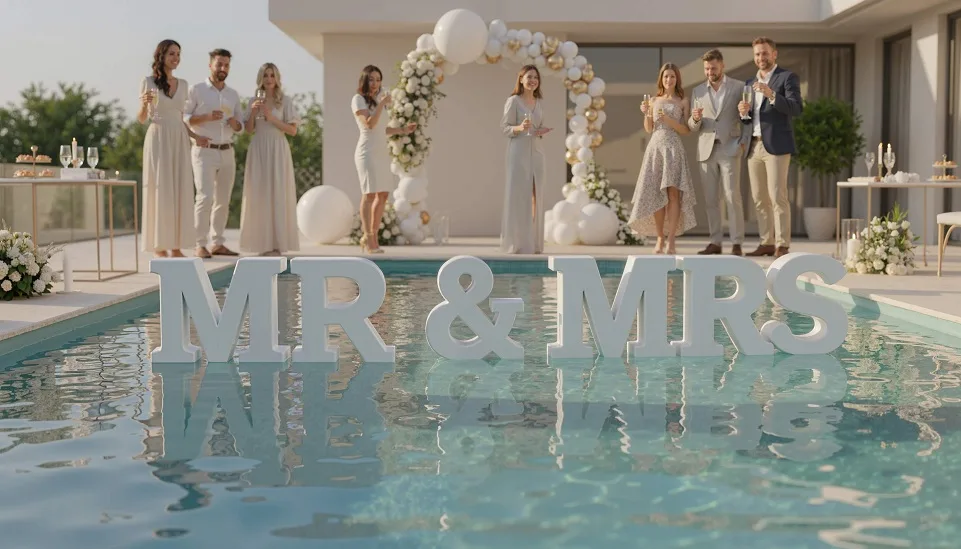
Floating Pool Letters: A Fresh Way to Brand Pool Parties, Resorts, and Brand Activations
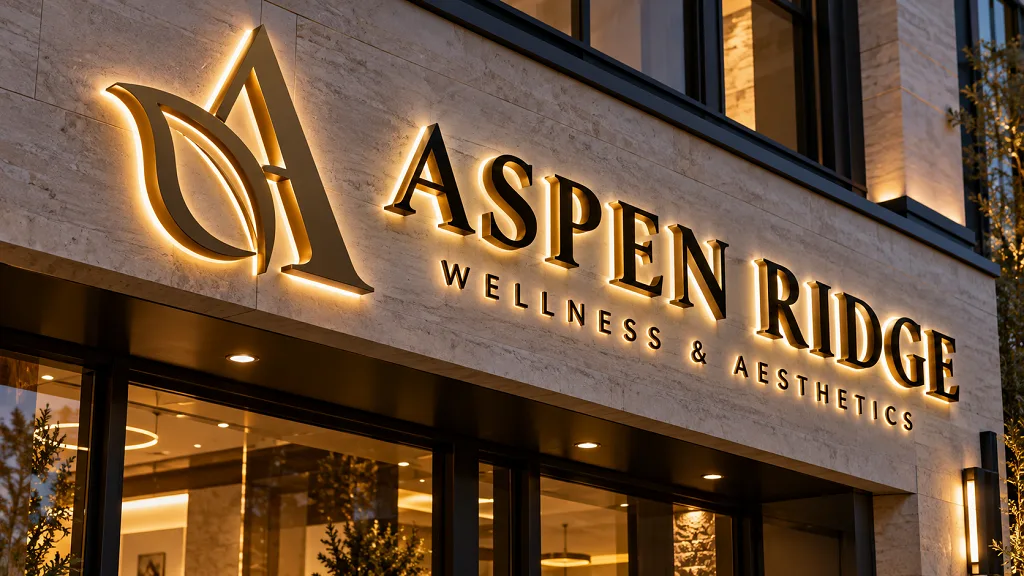
Premium 3D Dimensional Signage with Professional Lighting Solutions
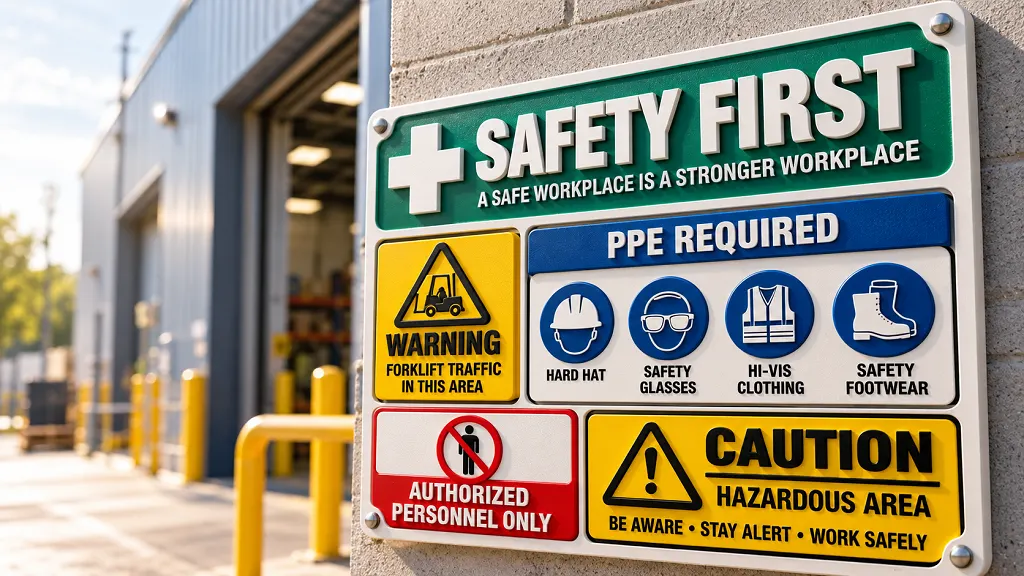
Safety and Warning Signs for the Workplace: A Complete Guide for Business Owners
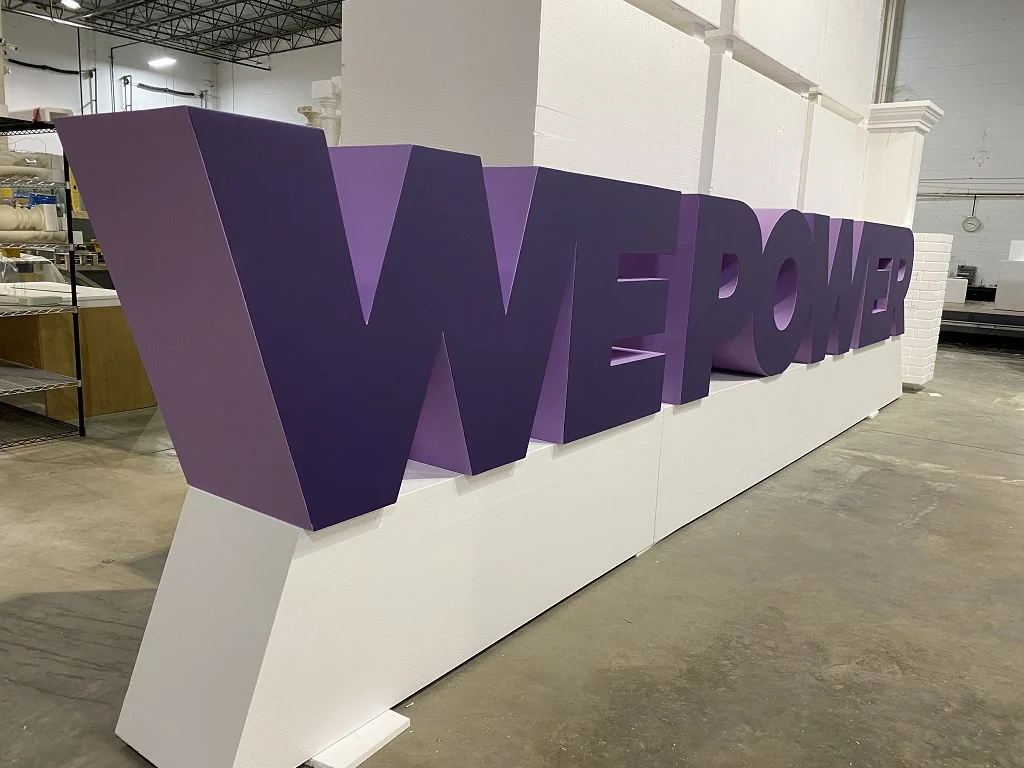
Massive 3D Dimensional Signage That Commands Attention
Recommended Articles
Foam Routed Signs and CNC-Cut Signage: When and Why Businesses Choose This Format
Hanging Signs for Trade Show Booths: Weight, Rigging, and Sightlines That Work
Oversized Foam Letters for Events, Retail Displays, and Brand Activations
PVC, Acrylic, or Small Metal Letters: Choosing the Right Dimensional Letters for Your Storefront
Foam Sculptures and Oversized Product Replicas: How Brands Build Unmissable Experiential Marketing
How Backlit and Halo-Lit Signs Turn a Storefront Into a Landmark After Dark