Custom Foam Mascots & Character Props
Any space — retail or entertainment — can turn into a fantastic world that neither kids nor adults really want to leave. How? There’s a simple, highly effective solution: “populate” your space with realistic foam characters. A 6-foot superhero at the entrance to a shopping center, a playful dinosaur in the lobby of a children’s museum, a robot with flashing lights in a gadget store — pieces like these grab attention and pull visitors in, getting them to stop and engage.
“Almost lifelike.” Why foam characters are indispensable in many cases
Why choose foam characters in the first place? The material lets you realize ambitious character concepts without the weight, cost, and time constraints that come with traditional sculpting materials. At 3D Sign Factory, we produce both flat and three-dimensional characters, as well as custom foam logos, made from expanded polystyrene — the same custom architectural foam fabrication we apply across the rest of our product line, adapted here for character work.
Here’s roughly what production looks like when a character is sculpted from fiberglass or resin instead. First, a mold gets built — that alone can take several weeks. Then the base material goes on layer by layer. By the time it’s done, a 6-foot character — say, the superhero mentioned above — can weigh 150 to 200 pounds, and the whole process, from concept to installation, might stretch across two months. The same character built from expanded polystyrene (EPS) weighs 20 to 30 pounds and can be finished in three weeks, protective coatings included.
In most cases, an EPS character costs meaningfully less, even with elaborate finishing. That difference matters — the budget for one heavy figure can instead fund a whole “family” of characters. Richer storylines become possible. So does giving multiple branches of the same chain, whether they’re retail stores or children’s playrooms, a consistent look.
The properties of expanded polystyrene open up a few things designers and contractors both tend to appreciate:
- Architectural freedom. Complex curves, impossible-looking projections, gravity-defying poses that would normally need internal armatures — foam handles all of it without much fuss.
- Rapid iteration. You can change the design mid-fabrication instead of scrapping a mold and starting over.
- A wide range of finishes. EPS foam takes paint and decorative coatings well — anything from cartoon-smooth surfaces to something rougher and more organic.
- Scale flexibility. Sizes run from tabletop pieces up to installations over 20 feet tall.
- Easy transportation. Foam structures usually move in standard vehicles, so specialized trucks aren’t needed.
Custom foam characters are our specialty
Picture this: you order a foam prop — custom foam gnomes, say, for a children’s café. A couple of months later, the same gnomes show up in a kids’ shoe store across town. Working with 3D Sign Factory avoids that awkward scenario entirely. Every character we build starts from scratch, shaped around your vision, your brand, and your budget.
If you’re working with a licensed character — something from a cartoon or comic book — we can reproduce it with real accuracy, down to the details that make it recognizable. Developing your own custom mascot instead, one that actually embodies your brand’s values? That’s where our collaborative design process comes in, turning an abstract concept into something with a physical presence and a personality.
For licensed replicas, the process starts with a close look at the source material. Our team studies the character models, official guides, and reference imagery to get it right. For an original mascot, we work from sketches — yours or ours — and 3D visualizations, refining proportions, expressions, and poses before production even begins. That pre-production stage is what makes sure the finished character actually matches what you had in mind, whether that’s a playful creature for a kids’ brand or something sleeker for a tech company.
Dimensional vs. Foam Board Characters:
Which Option Is Right for Your Project?
EPS foam is easy to work with, and it lends itself to both three-dimensional figures and flat ones. In advertising and entertainment, each type tends to serve a different purpose.
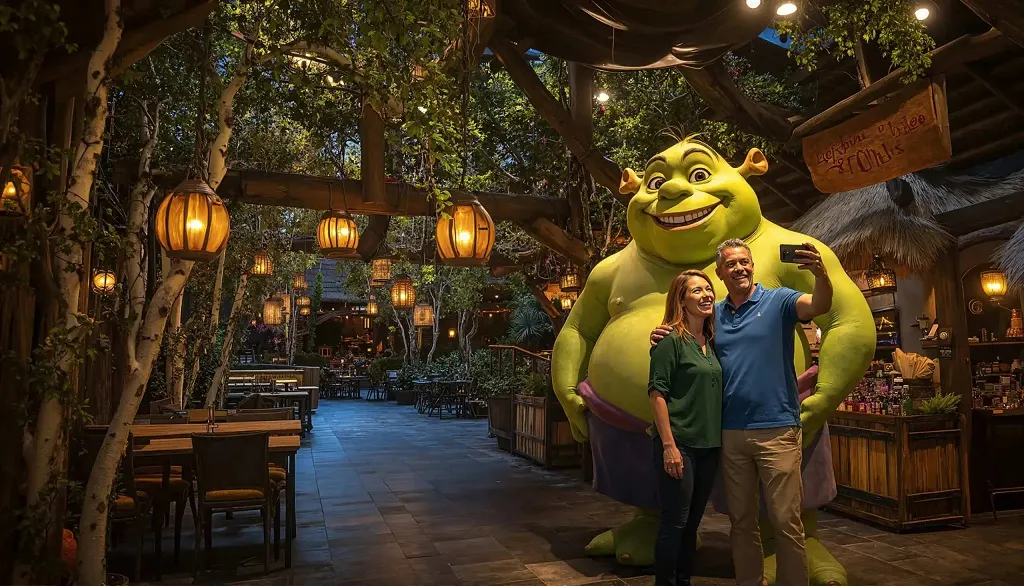
Three-dimensional, lifelike foam characters make a real impression in large spaces — theme park entrances, conference center atriums, shopping mall concourses. They draw attention from every angle and often turn into natural gathering spots, the kind of thing people stop to take photos with.
Flat characters do something different, but no less useful. These flat or low-relief pieces, including a standalone foam character head cutout, work well in photo zones, shop windows, and wall installations. A retail brand might set up a flat cut-out character that shoppers can pose next to, without getting in anyone’s way. Escape rooms use flat panels the same way — as narrative props that guide players through a story without taking up space they need to move through.
Choosing between three-dimensional and flat characters usually comes down to space, how people are expected to interact with them, and installation requirements. A lot of projects end up combining both: dimensional figures anchoring key spots, flat ones filling in the rest.
Combining both approaches also works well for children’s events, especially themed ones like holiday characters. Personalized party characters and decorations go a long way toward making the whole thing feel unforgettable.


Motionless magicians: where EPS characters can be useful
A well-made, lifelike mascot adds energy to a space — ask any experienced graphic designer, and they’ll say the same. But where does that advertising impact actually show up?
- In retail stores and shopping centers, EPS figures and foam props for marketing pull visitors in and turn a routine purchase into something more like an experience. A fashion retailer, for instance, might install stylized mannequins representing different types of shoppers, each one surrounded by the products meant for them.
- Theme parks and entertainment centers need characters tough enough to survive constant contact from visitors while still looking good. These pieces can also double as landmarks — kids understand “turn left at the purple octopus” far more instinctively than they’d read a directional sign.
- When a company launches a new product or exhibits at a trade show, an EPS character built around the product’s benefits or the brand’s message tends to stick. Attendees remember the mascot long after they’ve forgotten the graphics on the booth or the brochures they picked up.
- At children’s parties, entertainment venues, and educational spaces — including school mascots — characters are built to delight kids while surviving the touching, hugging, and climbing that’s basically inevitable. A pediatric dental office, for example, might use friendly tooth characters to make the clinical setting feel a little less intimidating.
- Escape rooms and interactive attractions rely on EPS characters as narrative devices, guiding players through the story.
- Corporate events and brand activation use characters to make abstract ideas tangible. A cybersecurity company might build a “digital guardian” for its conference booth, giving its protective services a face. These characters end up as conversation starters, giving booth staff a natural way to engage people walking by.
Street rulers: why foam characters show their best side outdoors
Customers often come to us for realistic foam figures meant for outdoor, public spaces — and for good reason. EPS is one of the few materials that manages to look visually striking while also holding up against the elements.
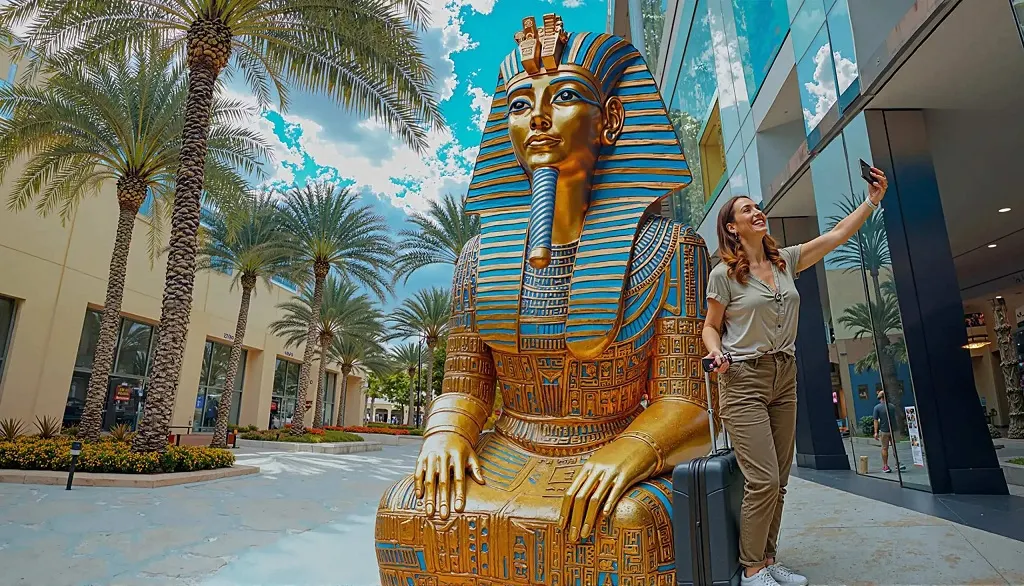
The closed-cell structure of EPS naturally repels water, so moisture doesn’t soak in or build up inside. Add urethane protective coatings and acrylic finishing systems built for outdoor use, and the resulting figures can take:
- Persistent rain and humidity
- Extreme temperatures, from summer heat to winter freeze
- UV exposure
- Wind loads
On top of that, foam’s light weight makes outdoor installation simpler and safer. A 200-pound concrete figure often needs foundation work and structural engineering calculations before it can go in the ground. A 25-pound foam figure, on the other hand, mounts with standard fasteners onto decking, concrete pads, or steel frames. That cuts installation costs and keeps things stable even in moderate wind — helped along by the material’s slight flexibility, which spreads stress more evenly than rigid materials do.
Why you should partner with us for custom foam characters
Nearly 25 years focused exclusively on custom foam fabrication has let us refine our character process to a point where the usual pain points — the ones that trip up projects handled by generalist fabricators — mostly don’t come up.
Where competitors treat foam as just one service among many, we’ve built our process around it. Hundreds of character projects later, that specialization shows.
Collaboration runs through every stage of our workflow. Initial consultations turn rough ideas into detailed 3D visualizations, so you know exactly what you’re getting before production starts. And our specialists can pick up a project from any starting point — even if all you have is a napkin sketch.
The 10-year warranty on our foam products reflects the material knowledge and finishing systems we’ve built up over decades. We also keep project documentation on file throughout that period — so if a piece gets damaged, or you want to expand your character lineup years down the road, we can recreate elements or adjust existing installations while keeping everything consistent.
Our manufacturing facility in Jacksonville is the largest of its kind in the region, which means we handle everything from single characters to full themed environments in-house — no third-party contractors, no capacity limits getting in the way. Your timeline doesn’t depend on some subcontractor’s schedule or juggling multiple suppliers.
Ready to order birthday mascots, or foam characters for a dream party setup, or something that defines your brand experience? Reach out by phone or through the button on our website, and we’ll talk through what’s possible and get you a quote.
Read more
Foam Routed Signs and CNC-Cut Signage: When and Why Businesses Choose This Format
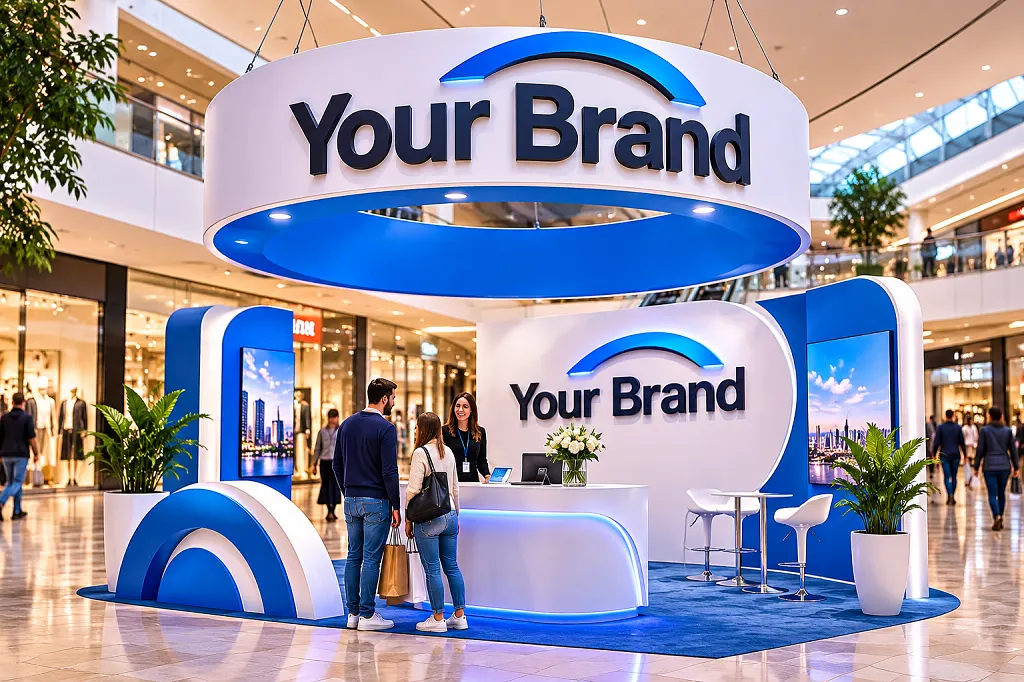
Hanging Signs for Trade Show Booths: Weight, Rigging, and Sightlines That Work
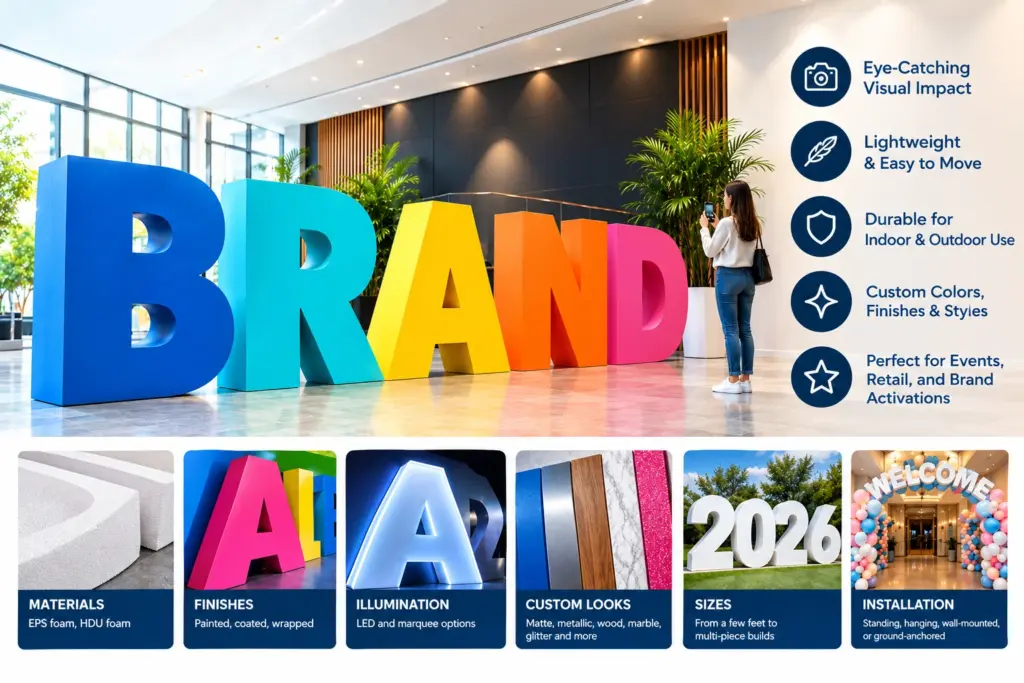
Oversized Foam Letters for Events, Retail Displays, and Brand Activations
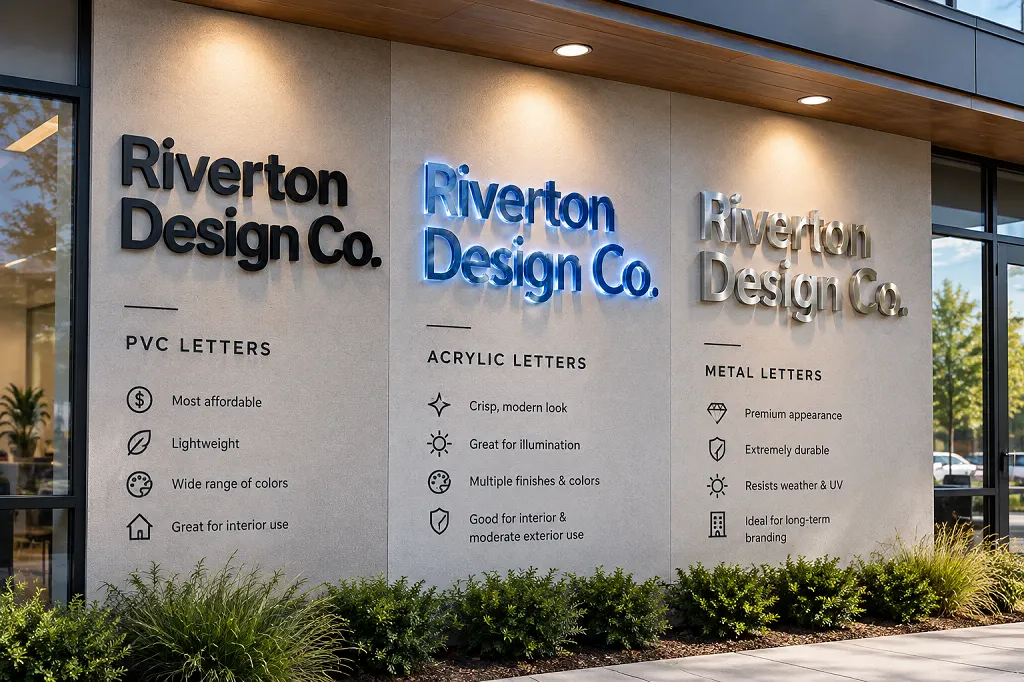
PVC, Acrylic, or Small Metal Letters: Choosing the Right Dimensional Letters for Your Storefront
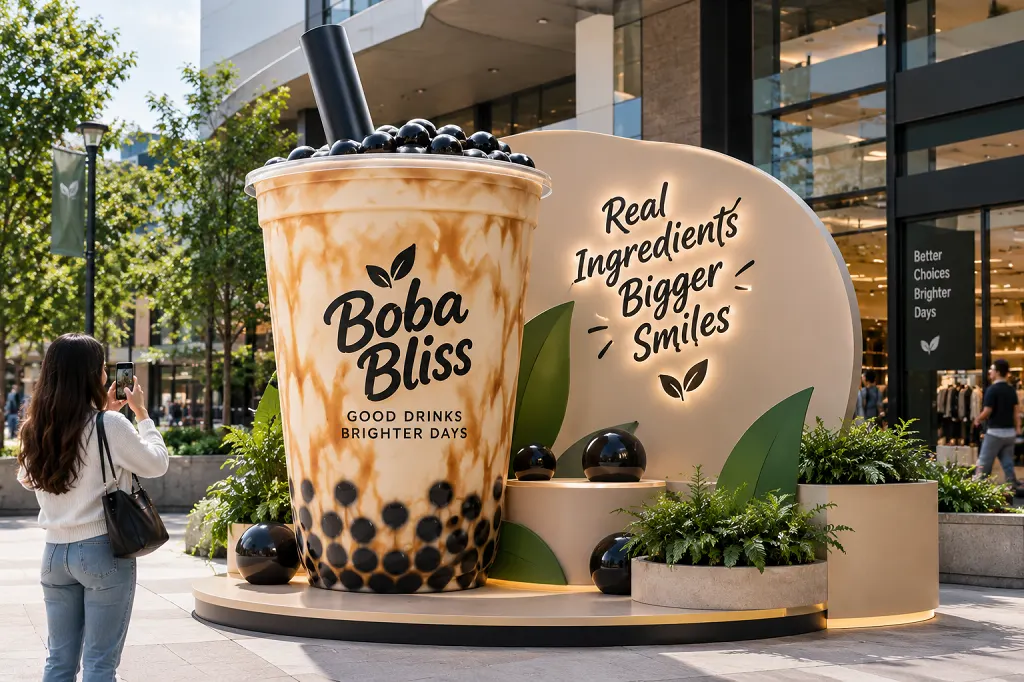
Foam Sculptures and Oversized Product Replicas: How Brands Build Unmissable Experiential Marketing
How Backlit and Halo-Lit Signs Turn a Storefront Into a Landmark After Dark
Digital Signage for Business: What It Is and How to Use It Effectively
Sandblasted and V-Carved Signs: The Craft Behind Timeless, Hand-Finished Business Signage
Floating Pool Letters: A Fresh Way to Brand Pool Parties, Resorts, and Brand Activations
Premium 3D Dimensional Signage with Professional Lighting Solutions
Safety and Warning Signs for the Workplace: A Complete Guide for Business Owners
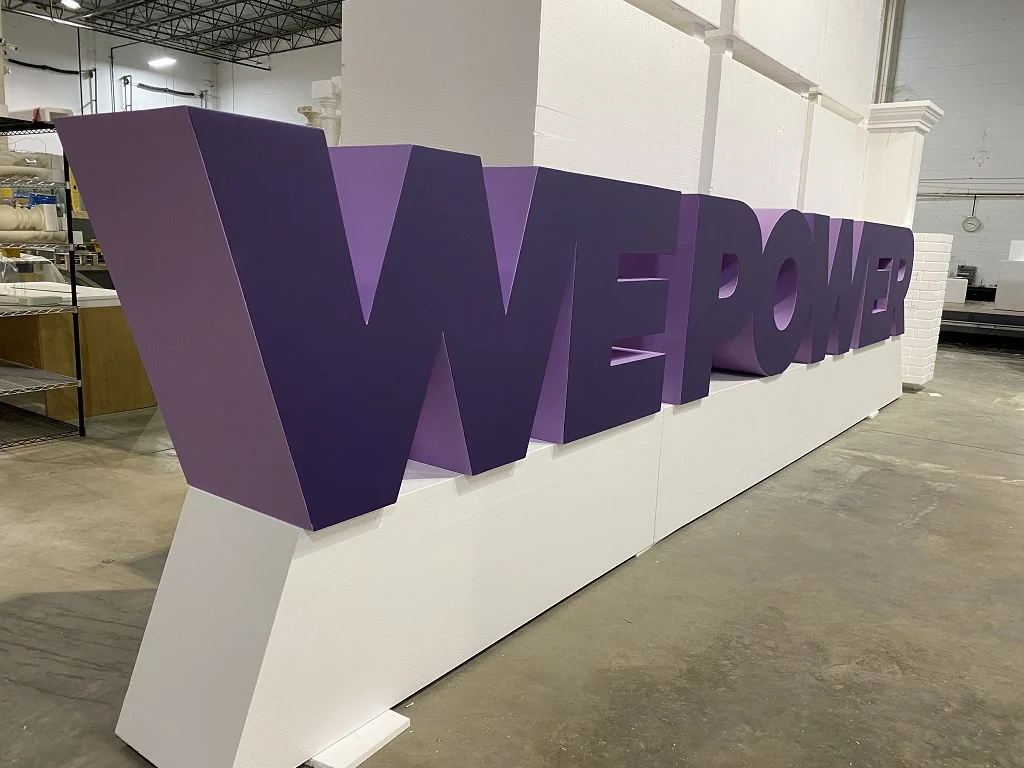
Massive 3D Dimensional Signage That Commands Attention
Recommended Articles
Foam Routed Signs and CNC-Cut Signage: When and Why Businesses Choose This Format
Hanging Signs for Trade Show Booths: Weight, Rigging, and Sightlines That Work
Oversized Foam Letters for Events, Retail Displays, and Brand Activations
PVC, Acrylic, or Small Metal Letters: Choosing the Right Dimensional Letters for Your Storefront
Foam Sculptures and Oversized Product Replicas: How Brands Build Unmissable Experiential Marketing
How Backlit and Halo-Lit Signs Turn a Storefront Into a Landmark After Dark