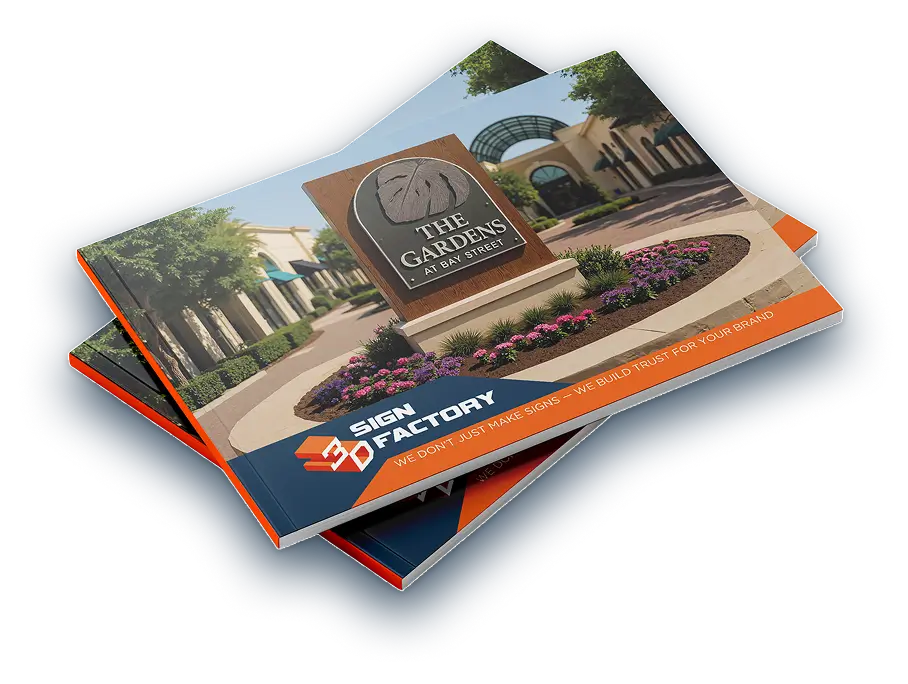
Custom Foam Monument Signs: Engineering-Driven Visibility with Lower Cost, Higher Design Freedom, and Sustainable Lifecycle
Quick Navigation
- What a Foam Monument Sign Really Is
- Engineering Mechanics: Why EPS Systems Outperform
- Material Comparison: Choosing the Right Solution
- Sustainability and Full Foam Recycling
- 3D Sign Factory Production Process
- Real Project Case: Applied Engineering Results
- Economic Impact and Lifecycle Savings
- Design Capabilities and Finish Options
- Frequently Asked Questions
Discover why foam exceeds traditional materials and has become the preferred solution for modern monument sign production. What’s missing in most industry content is a system-level engineering perspective—where material, structure, coatings, and installation are treated as one integrated solution.
This article explains how EPS foam monument signs with advanced coating systems solve these issues while also introducing something increasingly critical today: full material recyclability without performance loss.

What is Foam Monument Sign Really Is
A foam monument sign is not a “lightweight alternative”—it is a layered engineered composite system:
- Core: EPS (1.0–3.0 lb/ft³ density)
- Precision shaping: CNC milling / hot wire cutting
- Reinforcement: structural mesh or composite layers
- Protective shell: polyurethane / polyurea coatings (2–10 mm)
- Finish: architectural textures (stone, brick, wood)
The key principle:
Performance comes from system integration—not raw material mass.
Engineering Mechanics: Why EPS Systems Outperform
Weight as a Strategic Advantage
EPS structures are 70–90% lighter than concrete, which directly reduces:
- installation cost
- need for cranes or heavy equipment
- structural load on foundations
In constrained or urban environments, this is often the deciding factor.
Coating System = Structural Performance
The foam core provides geometry—but the coating provides durability:
- Polyurea → impact resistance
- Polyurethane → UV and weather protection
- Composite layering → structural rigidity
Failures in the field are almost always due to incorrect coating selection, not foam itself.
Wind Load & Environmental Adaptation
Unlike rigid materials, foam systems can be engineered to:
- reduce wind resistance through geometry
- integrate reinforcement only where needed
- adapt thickness to regional climate (e.g., Florida wind loads)
Material Comparison (Decision Framework)
| Parameter | EPS Foam | Concrete | Wood | Metal |
| Weight | Very low | Extremely high | Medium | High |
| Installation | Fast | Complex | Moderate | Complex |
| Design flexibility | Very high | Low | Medium | Medium |
| Maintenance | Low | Low | High | Medium |
| Lifecycle cost | Low | High | Medium | Medium |
Conclusion: EPS is not just a material—it is a project optimization tool.
Sustainability & Full Foam Recycling (Closed-Loop System)
A critical but often overlooked advantage of EPS monument signs is complete recyclability.
Unlike concrete, treated wood, or mixed-material signage, EPS can be fully reprocessed and reused without significant loss of performance.
At 3D Sign Factory, this is implemented through real production infrastructure:
- CNC scrap is collected and processed
- EPS waste is densified into reusable raw material
- Recycled material is reintroduced into manufacturing cycles
- Landfill waste is significantly reduced
This creates a closed-loop material system:
Production → Waste → Densification → Reuse → New Product
Why This Matters
- Developers meet sustainability and compliance goals
- Projects reduce disposal and environmental costs
- Architects gain access to high-performance yet responsible materials
Engineering Reality
Recycling does not compromise structural performance because:
The strength of the system is in the coating layer—not the foam core itself
This allows recycled EPS to perform identically when paired with:
- polyurea coatings
- polyurethane layers
- reinforced structural systems
3D Sign Factory Production Process (Real Engineering Workflow)
- CAD Engineering
Defines geometry, mounting logic, and structural behavior - CNC / Hot Wire Cutting
High-precision shaping with multi-axis systems - Assembly & Reinforcement
Structural integration of modules - Coating Application
Polyurethane / polyurea via high-pressure systems - Texture & Finishing
Faux stone, brick, or wood detailing - Pre-Installation Testing
Fit validation and quality control
This process remains flexible—allowing real-time adjustments during production, which is a core advantage of small-scale engineering manufacturing.
Real Project Case (Applied Engineering)
Challenge:
Retail center customers repeatedly missed the entrance
Constraints:
- High-speed road
- Limited installation access
- Existing signage ineffective
Solution:
- Custom foam monument sign with optimized height and geometry
- Improved contrast and visibility angle
- Lightweight installation (no crane required)
Result:
- Immediate improvement in navigation
- Increased foot traffic consistency
- Reduced operational complaints
Unique Engineering Capabilities (Small-Scale Advantage)
3D Sign Factory enables:
- Real-time geometry adjustments during production
- Coating customization by climate zone
- Custom mounting systems for complex surfaces
- Integration of lighting and future elements
- Compensation for construction inaccuracies
These are not scalable in corporate production models—but critical in real projects.
Common Mistakes in Monument Sign Projects
- Choosing material before evaluating installation constraints
- Underestimating coating importance
- Ignoring wind load in tall structures
- Using standard designs for non-standard sites
Economic Impact (Lifecycle Perspective)
| Factor | EPS Foam Impact |
| Installation cost | Significantly reduced |
| Equipment needs | Minimal |
| Production flexibility | High |
| Maintenance | Low |
| Replacement cycle | Extended |
Typical total savings: 20–40% across lifecycle, not just fabrication.
Design Capabilities
3D Sign Factory supports:
Faux Stone (10 collections)
Faux Brick (2 collections)
Faux Wood (multiple textures)
Advantages include:
- no cracking or rot
- UV resistance
- high realism
- lightweight installation
- long-term durability
FAQ
Can foam look identical to stone?
Yes—high-resolution CNC and coatings achieve near-perfect realism.
How long does it last?
20+ years with proper coatings.
Is it structurally safe?
Yes—when engineered as a system.
Is it environmentally responsible?
Yes—EPS is fully recyclable and supports closed-loop production.
Do I need heavy equipment?
In most cases, no.
Why 3D Sign Factory
✔ Engineering-first approach
✔ Full customization without catalog limits
✔ Advanced coating systems
✔ Fast, adaptive production
✔ Closed-loop material recycling
✔ Direct engineer-to-client communication
Conclusion
Foam monument signs represent a shift from material-based thinking to system-based engineering.
They outperform traditional solutions not just in:
- weight
- cost
- flexibility
…but also in sustainability, offering a rare combination of performance + recyclability.
When properly engineered, they don’t just look better—
they work better, install easier, last longer, and waste less.
Read more

Foam Routed Signs and CNC-Cut Signage: When and Why Businesses Choose This Format
Hanging Signs for Trade Show Booths: Weight, Rigging, and Sightlines That Work
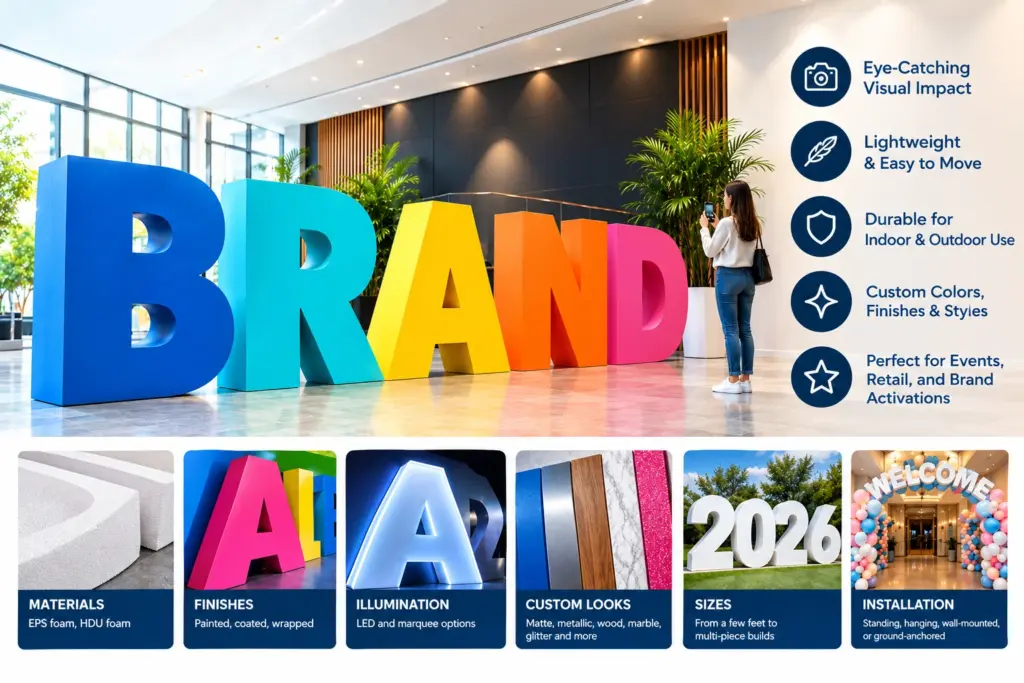
Oversized Foam Letters for Events, Retail Displays, and Brand Activations
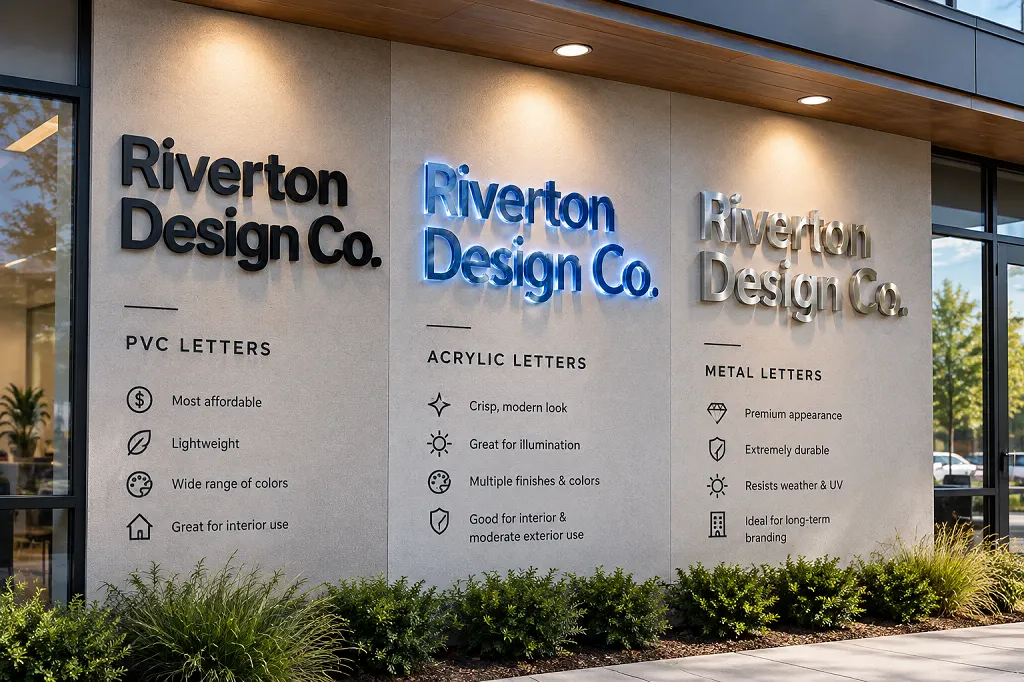
PVC, Acrylic, or Small Metal Letters: Choosing the Right Dimensional Letters for Your Storefront
Foam Sculptures and Oversized Product Replicas: How Brands Build Unmissable Experiential Marketing

How Backlit and Halo-Lit Signs Turn a Storefront Into a Landmark After Dark
Digital Signage for Business: What It Is and How to Use It Effectively
Sandblasted and V-Carved Signs: The Craft Behind Timeless, Hand-Finished Business Signage

Floating Pool Letters: A Fresh Way to Brand Pool Parties, Resorts, and Brand Activations

Premium 3D Dimensional Signage with Professional Lighting Solutions
Safety and Warning Signs for the Workplace: A Complete Guide for Business Owners
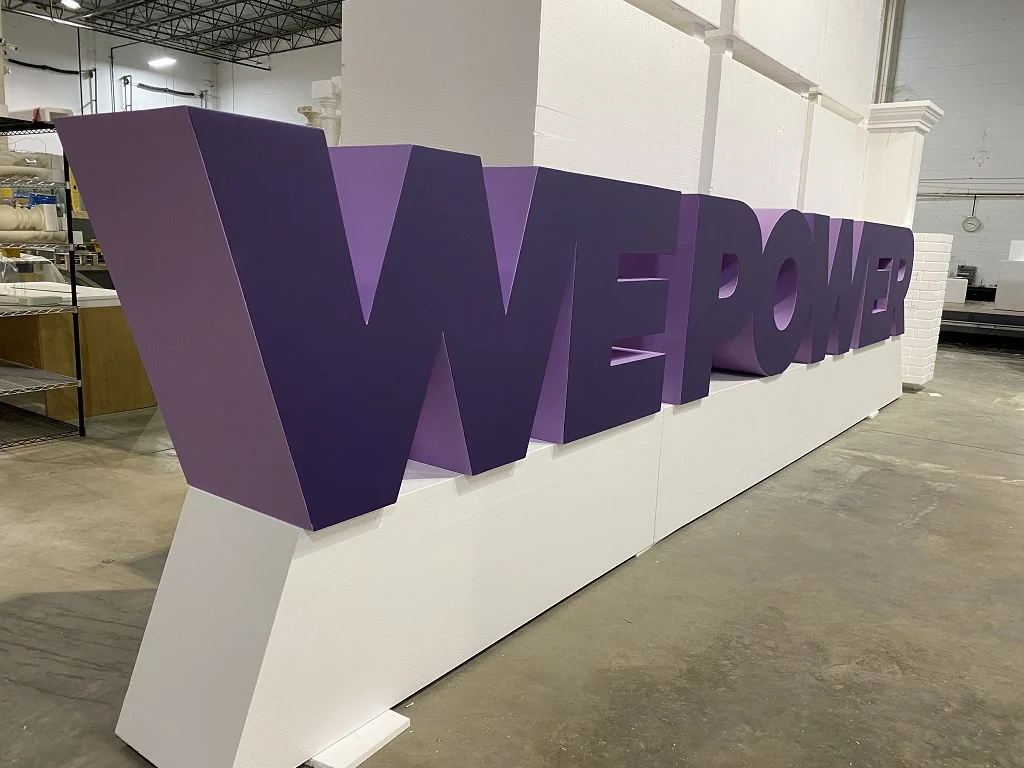
Massive 3D Dimensional Signage That Commands Attention
Recommended Articles
Foam Routed Signs and CNC-Cut Signage: When and Why Businesses Choose This Format
Hanging Signs for Trade Show Booths: Weight, Rigging, and Sightlines That Work
Oversized Foam Letters for Events, Retail Displays, and Brand Activations
PVC, Acrylic, or Small Metal Letters: Choosing the Right Dimensional Letters for Your Storefront
Foam Sculptures and Oversized Product Replicas: How Brands Build Unmissable Experiential Marketing
How Backlit and Halo-Lit Signs Turn a Storefront Into a Landmark After Dark